
On this page
- Breaux Bridge at a glance
- What should you know about Breaux Bridge?
- What does a bayou town mean for gutters?
- What is the best gutter setup for a house in Breaux Bridge?
- How does the weather shape gutter work in Breaux Bridge?
- How much gutter does a typical house in Breaux Bridge need?
- Which gutter work is common in Breaux Bridge?
- Which roads, waterways and landmarks are around Breaux Bridge?
- What should a homeowner in Breaux Bridge look for?
- What happens when a contractor visits?
- Nearby areas
Breaux Bridge at a glance
| Parish | St. Martin |
| Population (2020) | 7,513 |
| Founded | 25 August 1829 |
| Incorporated | 1859 |
| Name from | Firmin Breaux's 1799 footbridge |
| Elevation | About 23 feet |
| Waterway | Bayou Teche |
| Nickname | Crawfish Capital of the World |
What should you know about Breaux Bridge?
In 1799 Firmin Breaux built a footbridge across Bayou Teche, and travelers were told to "go to Breaux's bridge." The phrase became the name. Breaux Bridge was founded on 25 August 1829 by Scholastique Picou Breaux, a widow, and incorporated in 1859. The 2020 census counted 7,513 people in St. Martin Parish. The city calls itself the Crawfish Capital of the World.
The city covers about 7.9 square miles at around 23 feet, with Bayou Teche running through it.
What does a bayou town mean for gutters?
Older houses near the bayou are often raised on piers and shaded by big live oaks. Raised floors need downspouts that carry water past the piers instead of under the house. Oaks fill gutters with leaves and catkins every spring. Newer houses on the edges of town face the usual Acadiana issues of heavy rain and flat ground. Rain here matches Lafayette's, about 62.81 inches a year, with frequent summer cloudbursts.
What is the best gutter setup for a house in Breaux Bridge?
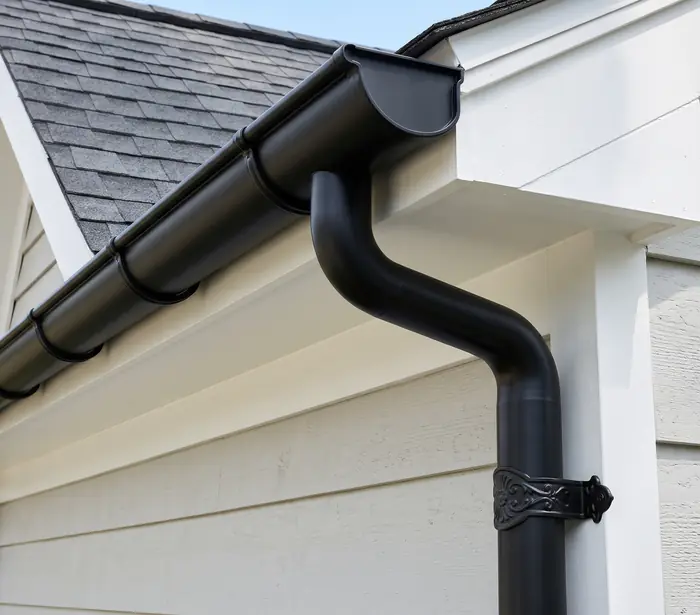
Older raised houses suit half-round or K-style with careful drainage around piers; newer houses suit seamless K-style.
| Usual choice in Breaux Bridge | |
|---|---|
| Gutter | 5 or 6-inch K-style; half-round on older houses |
| Metal | Aluminum; copper on some historic houses |
| Downspouts | 3x4 or round 4-inch, carried past piers |
| Fastening | Hidden hangers or brackets about every 2 feet |
| Guards | Micro-mesh under live oaks |
| Cleaning | Twice a year or more under oaks |
| Discharge | Past the piers and away from the house |
| Main risks | Oak debris, water under raised floors, old fascia |
| Rules | City of Breaux Bridge; state registration or license by job value |
How does the weather shape gutter work in Breaux Bridge?
Breaux Bridge shares Lafayette's climate. The 1991 to 2020 normals for Lafayette Regional Airport, listed on Wikipedia, average 62.81 inches of precipitation a year, with June the wettest month at 7.09 inches and March the driest at 3.72. That is rain on more than 115 days a year, and much of it comes in short, heavy bursts. Gutters here are built for volume and intensity, and fastened for wind. This is how the year usually runs.
| Months | What it means for gutters in Breaux Bridge |
|---|---|
| January and February | Cool and wet; January averages almost 6 inches. Rare freezes, like January 2025, can load gutters with snow and ice |
| March and April | March is the driest month by the normals (3.72 inches), and this is live oak season: bayou-side live oaks drop leaves and catkins heavily; clean once the drop ends |
| May | Last good window before the wet months and hurricane season; check hangers and downspouts |
| June to August | The wettest months, each above 6 inches on average, with daily storms; watch clogged outlets in storms |
| September to November | Peak and tail of hurricane season; pecans and other trees shed; clean after leaf drop |
| December | Mild and wet; check for winter storm debris |
How much gutter does a typical house in Breaux Bridge need?
Gutters are priced by the foot, so eave length drives most of the cost. These rows multiply typical lengths for local houses by national installed ranges from Angi. They show scale and are not quotes.
| House | Typical eave length | Gutter | National range installed |
|---|---|---|---|
| Raised cottage | 110 to 160 ft | 5-inch seamless aluminum | about $990 to $2,080 |
| Single-story | 140 to 190 ft | 5-inch seamless aluminum | about $1,260 to $2,470 |
| Two-story | 200 to 250 ft | 6-inch seamless aluminum | about $2,400 to $4,500 |
Removing old gutters, fascia repair, extra downspouts, buried lines, guards and taller walls all add to these numbers.
Which gutter work is common in Breaux Bridge?
| House type | What goes wrong | Usual fix |
|---|---|---|
| Raised house near the bayou | Water ponding under the floor | Downspouts carried past the piers |
| Older house under oaks | Clogged, overflowing gutters | Cleaning, micro-mesh |
| Historic house | Soft fascia, mismatched gutters | Wood repair, half-round |
| Newer house | Downspouts at the slab | Extensions |
Which roads, waterways and landmarks are around Breaux Bridge?
- Water: Bayou Teche
- History: Firmin Breaux's 1799 footbridge and the 1817 bridge that replaced it
- Nickname: Crawfish Capital of the World
- Parish: St. Martin
- Neighbors: St. Martinville, Broussard, Carencro
What should a homeowner in Breaux Bridge look for?
- Water spilling over the front of the gutter in an ordinary afternoon storm.
- Dark streaks, peeling paint or soft spots on the fascia and soffit.
- A run that dips between supports or leans away from the board.
- Downspouts that stay silent in rain, or that empty right at the slab or under a raised floor.
- Water standing beside the house for hours after a storm.
- Seedlings, catkins or pine straw visible in the trough from the ground.
What happens when a contractor visits?
The contractor walks around the house, checks each run from the ground and a ladder, presses on the fascia, checks for a drip edge, and follows every downspout to see where its water goes. They explain what they find and give their own written quote, often with options such as repair, partial replacement or a new system. Nothing is agreed on the phone, and you decide once you have the quote.