
On this page
- St. Martinville at a glance
- What should you know about St. Martinville?
- What does a historic bayou town mean for gutters?
- What is the best gutter setup for a house in St. Martinville?
- How does the weather shape gutter work in St. Martinville?
- How much gutter does a typical house in St. Martinville need?
- Which gutter work is common in St. Martinville?
- Which roads, waterways and landmarks are around St. Martinville?
- What should a homeowner in St. Martinville look for?
- What happens when a contractor visits?
- Nearby areas
St. Martinville at a glance
| Parish | St. Martin (parish seat) |
| Population (2020) | 5,379 |
| Origin | Poste des Atakapas, a trading post on Bayou Teche |
| Named for | The St. Martin of Tours church |
| Waterway | Bayou Teche |
| Landmarks | Evangeline Oak; St. Martin of Tours Church; Duchamp Opera House (1830) |
| Terrain | Mixed swamp and prairie |
| Typical houses | Historic homes, raised cottages and newer single-story houses |
What should you know about St. Martinville?
St. Martinville began as the Poste des Atakapas, a trading post on Bayou Teche, and was renamed after Louisiana became a state, for the St. Martin of Tours church. It is the seat of St. Martin Parish and had 5,379 residents in 2020. The town is known for the Evangeline Oak, the site tied to Longfellow's poem about the Acadian expulsion, for St. Martin of Tours Catholic Church, and for the Duchamp Opera House, founded in 1830. It is a stop on the Louisiana African American Heritage Trail.
The terrain mixes swamp and prairie along the bayou.
What does a historic bayou town mean for gutters?
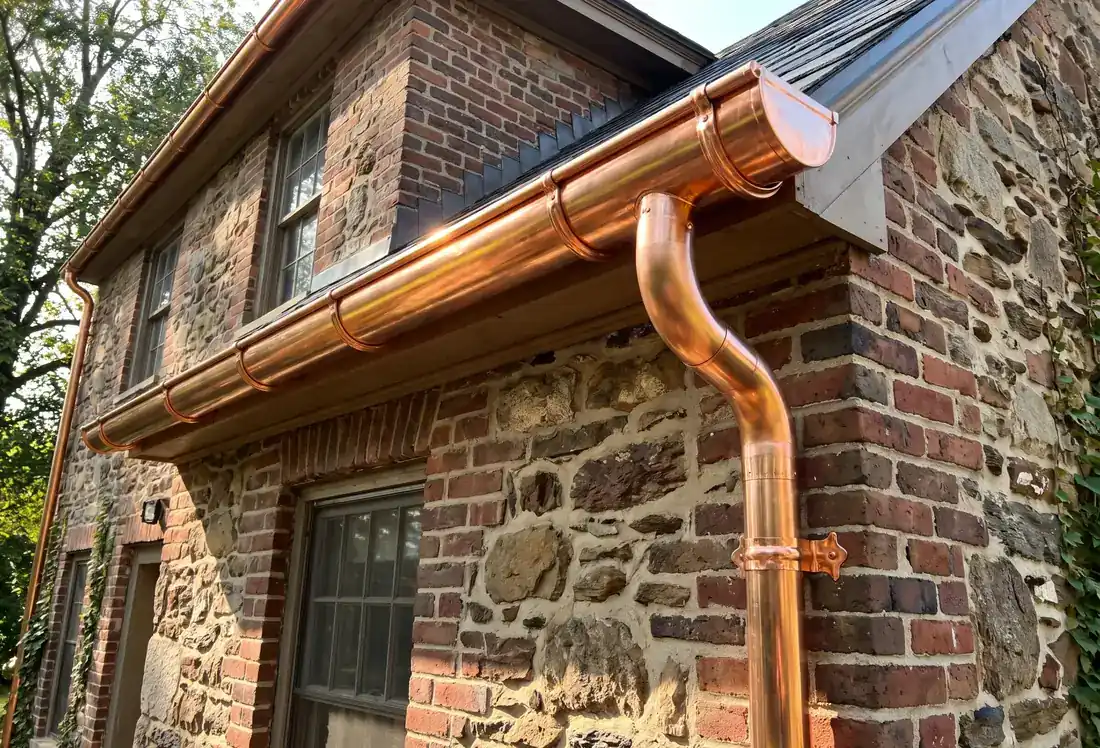
Old buildings need gutters that respect their character and fix gently to old wood. Half-round gutters, often in copper, suit many historic houses. Raised houses need downspouts carried past the piers. Big oaks along the bayou mean heavy debris in spring. And with about 62.81 inches of rain a year in the area, every gutter carries a lot of water.
What is the best gutter setup for a house in St. Martinville?
Historic character and old wood shape choices here: half-round or copper where it suits, careful bracket fixing, and drainage around piers.
| Usual choice in St. Martinville | |
|---|---|
| Gutter | Half-round on historic houses; K-style on newer ones |
| Metal | Copper or painted aluminum |
| Downspouts | Round on half-round; 3x4 on K-style |
| Fastening | Brackets or hidden hangers at close spacing |
| Guards | Mesh suited to the profile, under oaks |
| Cleaning | Twice a year or more |
| Discharge | Past the piers, away from foundations |
| Main risks | Old fascia, oak debris, water under raised floors |
| Rules | Check with the city before visible changes to historic buildings |
How does the weather shape gutter work in St. Martinville?
St. Martinville shares Lafayette's climate. The 1991 to 2020 normals for Lafayette Regional Airport, listed on Wikipedia, average 62.81 inches of precipitation a year, with June the wettest month at 7.09 inches and March the driest at 3.72. That is rain on more than 115 days a year, and much of it comes in short, heavy bursts. Gutters here are built for volume and intensity, and fastened for wind. This is how the year usually runs.
| Months | What it means for gutters in St. Martinville |
|---|---|
| January and February | Cool and wet; January averages almost 6 inches. Rare freezes, like January 2025, can load gutters with snow and ice |
| March and April | March is the driest month by the normals (3.72 inches), and this is live oak season: bayou live oaks drop leaves and catkins; clean once the drop ends |
| May | Last good window before the wet months and hurricane season; check hangers and downspouts |
| June to August | The wettest months, each above 6 inches on average, with daily storms; watch outlets and downspouts in storms |
| September to November | Peak and tail of hurricane season; pecans and other trees shed; clean after leaf drop |
| December | Mild and wet; check for winter storm debris |
How much gutter does a typical house in St. Martinville need?
Gutters are priced by the foot, so eave length drives most of the cost. These rows multiply typical lengths for local houses by national installed ranges from Angi. They show scale and are not quotes.
| House | Typical eave length | Gutter | National range installed |
|---|---|---|---|
| Raised cottage | 110 to 160 ft | 5-inch seamless aluminum | about $990 to $2,080 |
| Single-story | 130 to 180 ft | 5-inch seamless aluminum | about $1,170 to $2,340 |
| Two-story historic house | 180 to 240 ft | 6-inch seamless aluminum | about $2,160 to $4,320 |
Removing old gutters, fascia repair, extra downspouts, buried lines, guards and taller walls all add to these numbers.
Which gutter work is common in St. Martinville?
| House type | What goes wrong | Usual fix |
|---|---|---|
| Historic house | Soft fascia, worn gutters | Wood repair, half-round or copper |
| Raised cottage | Water under the floor | Downspouts past the piers |
| House under oaks | Clogged gutters | Cleaning, guards |
| Newer single-story | Downspouts at the slab | Extensions |
Which roads, waterways and landmarks are around St. Martinville?
- Water: Bayou Teche
- Landmarks: Evangeline Oak; St. Martin of Tours Church; Duchamp Opera House; La Maison Duchamp
- Heritage: African American Museum; Louisiana African American Heritage Trail
- History: Poste des Atakapas
- Neighbors: Breaux Bridge, New Iberia, Broussard
What should a homeowner in St. Martinville look for?
- Water spilling over the front of the gutter in an ordinary afternoon storm.
- Dark streaks, peeling paint or soft spots on the fascia and soffit.
- A run that dips between supports or leans away from the board.
- Downspouts that stay silent in rain, or that empty right at the slab or under a raised floor.
- Water standing beside the house for hours after a storm.
- Seedlings, catkins or pine straw visible in the trough from the ground.
What happens when a contractor visits?
The contractor walks around the house, checks each run from the ground and a ladder, presses on the fascia, checks for a drip edge, and follows every downspout to see where its water goes. They explain what they find and give their own written quote, often with options such as repair, partial replacement or a new system. Nothing is agreed on the phone, and you decide once you have the quote.